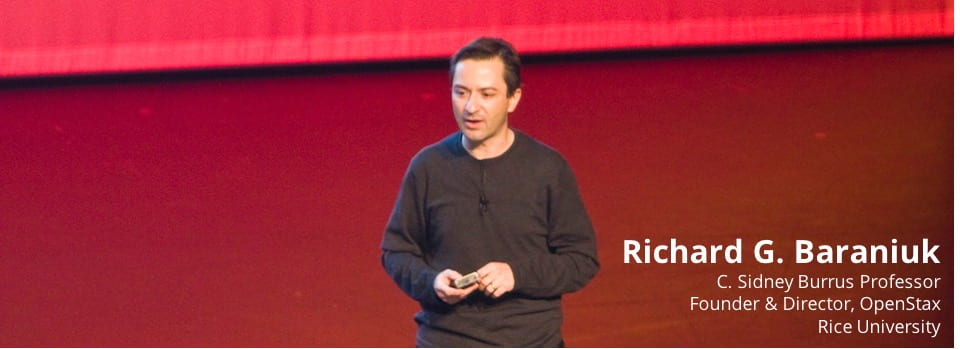
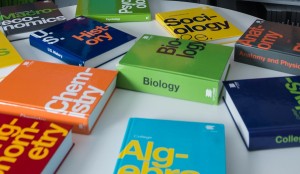
An article in the 28 July 2019 Wall Street Journal, "A Key Reason the Fed Struggles to Hit 2% Inflation: Uncooperative Prices" discusses the disruptive impact on the college textbook market of the free and open-source textbooks provided by OpenStax . Read online at Morningstar.com.
Author Archives: jkh6
Spline Theory of Deep Networks Talk at Simons Institute
“Mad Max: Affine Spline Insights into Deep Learning"
Frontiers of Deep Learning Workshop, Simons Institute
16 July 2019
References:
- “A Spline Theory of Deep Networks,” ICML 2018
- “Mad Max: Affine Spline Insights into Deep Learning,” arxiv.org/abs/1805.06576, 2018
- “From Hard to Soft: Understanding Deep Network Nonlinearities…,” ICLR 2019
- “A Max-Affine Spline Perspective of RNNs,” ICLR 2019
- “A Hessian Based Complexity Measure for Deep Networks,” arxiv.org/abs/1905.11639, 2019
Co-authors: Randall Balestriero, Jack Wang, Hamid Javadi
An alternative presentation at the Alan Turing Institute, May 2019 (Get your SPARFA merchandise here!)
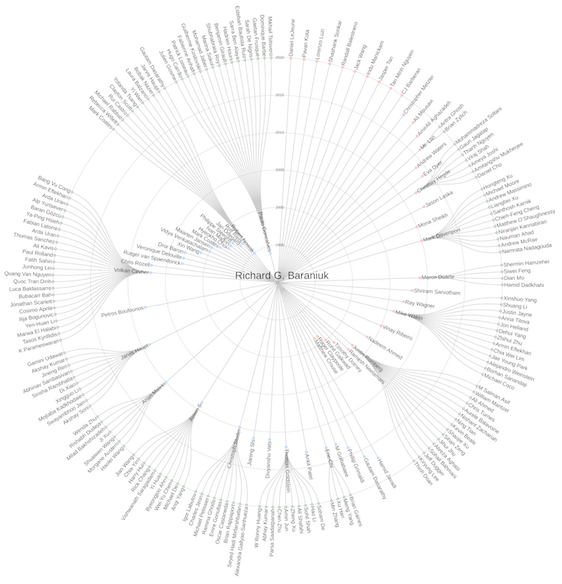
Academic Family Tree
Thanks to Shashank Sonkar, CJ Barberan, and Pavan Kota of the DSP group for producing the RichB Academic Family Tree ca. 2019. The code is available here.
Four Papers at ICLR 2019
DSP group members will be traveling en masse to New Orleans in May 2019 to present four regular papers at the International Conference on Learning Representations
- R. Balestriero and R. G. Baraniuk, “Hard to Soft: Understanding Deep Network Nonlinearities via Vector Quantization and Statistical Inference”
- J. Wang, R. Balestriero, and R. G. Baraniuk, “A Max-Affine Perspective of Recurrent Neural Networks”
- A. Mousavi, G. Dasarathy, and R. G. Baraniuk, “A Data-Driven and Distributed Approach to Sparse Signal Representation and Recovery”
- J. J. Michalenko, A. Shah, A. Verma, R. G. Baraniuk, S. Chaudhuri, and A. B. Patel, “Representing Formal Languages: A Comparison between Finite Automata and Recurrent Neural Networks”
Two Workshops at NIPS 2018
Two workshops have been accepted for NIPS in December 2018; more details soon on how to contribute:
- Integration of Deep Learning Theories (R. G. Baraniuk, S. Mallat, A. Anandkumar, A. Patel, and N. Ho)
- Machine Learning for Geophysical & Geochemical Signals (L. Pyrak-Nolte, J. Morris, J. Rustad, R. G. Baraniuk)
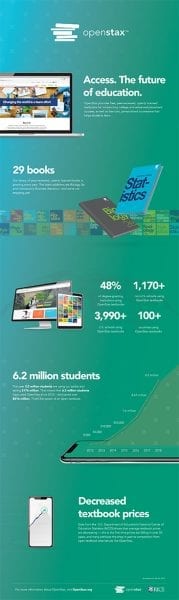
48% of US Colleges, 2.2 Million Students using Free OpenStax Textbooks This Year
This year, over 2.2 million students are saving an estimated $177 million by using free textbooks from OpenStax, the Rice University-based publisher of open educational resource materials. Since 2012, OpenStax's 29 free, peer-reviewed, openly licensed textbooks for the highest-enrolled high school and college courses have been used by more than 6 million students. This year, OpenStax added several new books to its library, including Biology for AP Courses, Introductory Business Statistics and second editions of its economics titles.
OpenStax books are having a tangible, marketwide impact, according to a 2017 Babson Survey that found that “the rate of adoption of OpenStax textbooks among faculty teaching large-enrollment courses is now at 16.5%, a rate which rivals that of most commercial textbooks." "We're excited about the rapidly growing number of instructors making the leap to open textbooks," said OpenStax founder Richard Baraniuk, the Victor E. Cameron Professor of Electrical and Computer Engineering at Rice. "Our community is creating a movement that will make a big impact on college affordability. The success of open textbooks like OpenStax have ignited competition in the textbook market, and textbook prices are actually falling for the first time in 50 years."
Read the full press release
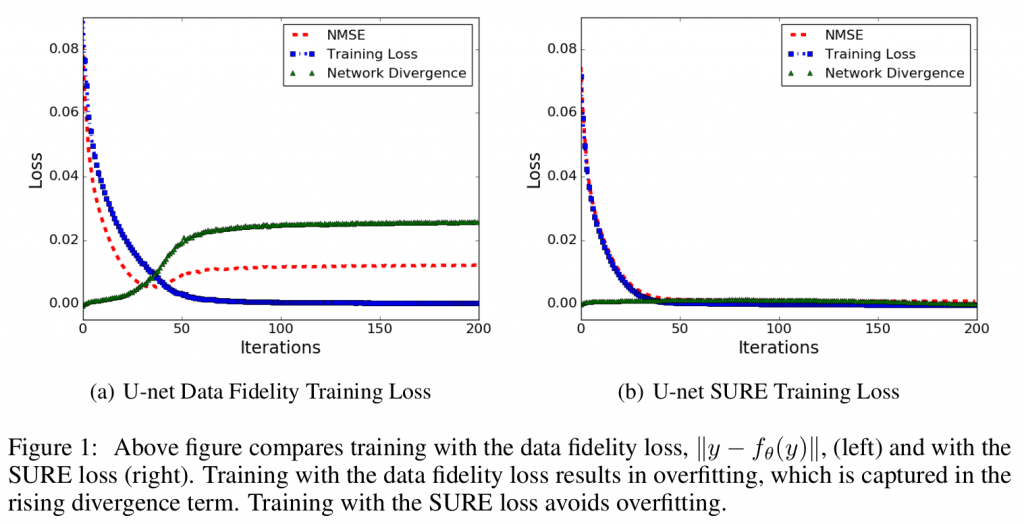
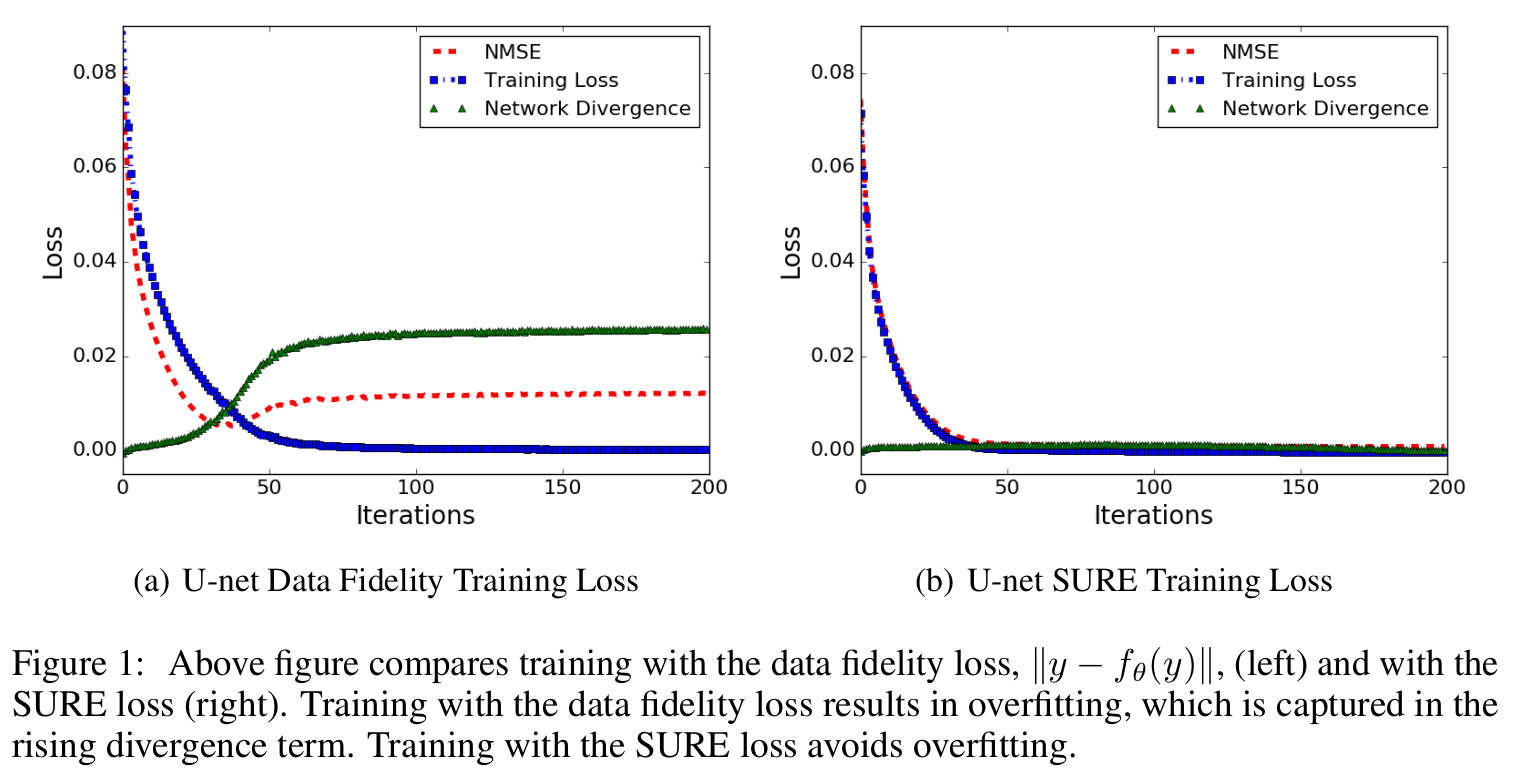
Unsupervised Learning with Stein’s Unbiased Risk Estimator
C. A. Metzler, A. Mousavi, R. Heckel, and R. G. Baraniuk, “Unsupervised Learning with Stein’s Unbiased Risk Estimator,” https://arxiv.org/abs/1805.10531, June 2018.
Rice Team Developing Flat Microscope for the Brain
Appearing today on NSF's Science360 News: Taking a closer look with a lens-free fluorescent microscope
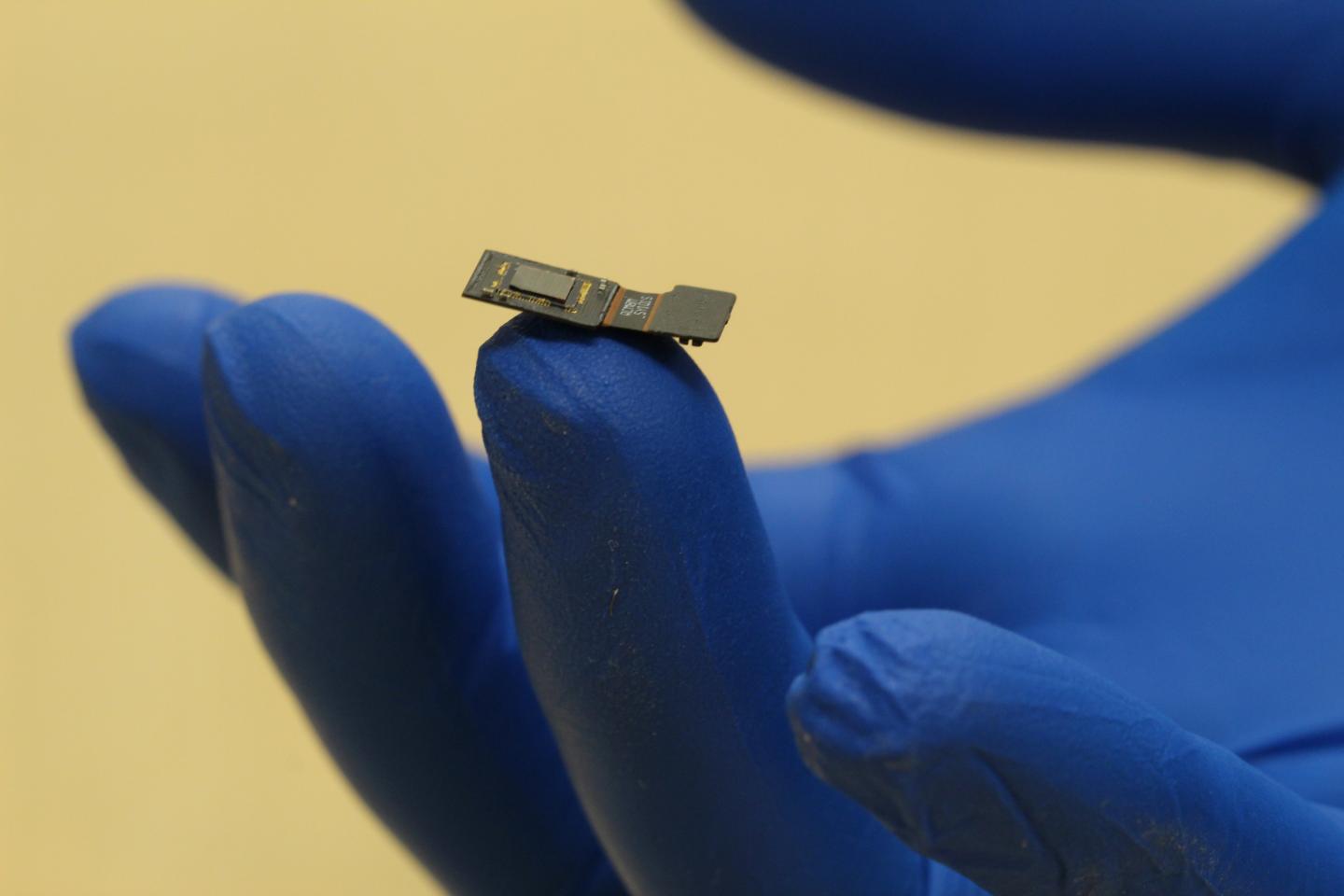
Rice University engineers are building a flat microscope, called FlatScope (TM), and developing software that can decode and trigger neurons on the surface of the brain. The goal as part of a new government initiative is to provide an alternate path for sight and sound to be delivered directly to the brain. The project is part of a $65 million effort announced this week by the federal Defense Advanced Research Projects Agency (DARPA) to develop a high-resolution neural interface. Among many long-term goals, the Neural Engineering System Design (NESD) program hopes to compensate for a person's loss of vision or hearing by delivering digital information directly to parts of the brain that can process it.
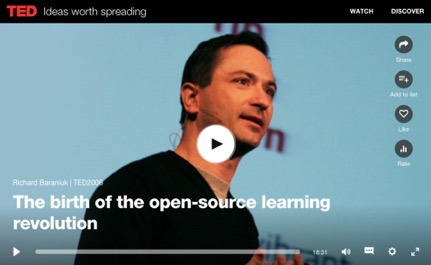
1 Million Views of Open Education TED Talk
The 2006 TED talk explaining the vision behind the open-source, online education system Connexions (now called OpenStax) surpassed 1 million views on the TED Talks website. We've come a long way from the genesis of Connexions in 1999!
OpenStax Market Share Jumps 50% from 2016

OpenStax’s market share in the college textbook market continues to grow rapidly. According to the latest Babson Survey Research Group Report on Open Educational Resources (OER), 16.5% of faculty who recently chose a new textbook for a large-enrollment introductory-level course adopted a textbook from OpenStax. This is up 50% over 2016’s adoption rate of 10.8%. The survey finds that OpenStax textbooks are being adopted for large-enrollment introductory courses at roughly the same rate as commercial textbooks.